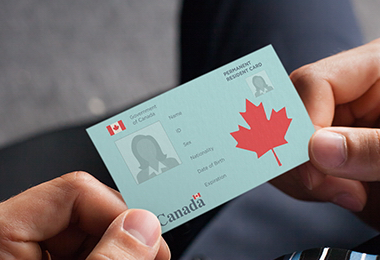
If you are an EU citizen hoping to move to the United States, the Diversity Visa (DV) Lottery—often called the Green Card Lottery—has traditionally been the “wild card” option. It is the one path that doesn’t require a job offer, a tech fortune, or a marriage certificate.
But if you have been trying to apply for the DV-2027 cycle (which usually opens in late 2025), you have likely hit a wall. You aren’t doing it wrong; the system has changed.
As of January 2026, the traditional timelines have broken down. We are in a unique “pause” period, and the rules of engagement for European applicants have shifted. Here is the reality of the American Dream lottery right now, stripped of the usual “land of opportunity” fluff.
The Current Status: Why You Can’t Apply Yet
Normally, the registration window opens in October and closes in November. This did not happen for the DV-2027 cycle.
The US Department of State has delayed the opening of the registration period. As of early 2026, the portal is not yet open. This delay is largely due to the implementation of a new $1 electronic registration fee and updated security vetting protocols.
What this means for you:
- Do not panic: The program has not been cancelled. It is mandated by US law.
- Ignore third parties: Any website claiming they can “register” you right now is a scam. Until the official
.govsite opens, nobody can submit an entry. - Watch the news: The window will likely open with short notice in early 2026. You need to be ready to move fast when it does.
The New $1 Rule
For decades, the lottery was entirely free to enter. That changed with the 2027 cycle. You will now be required to pay a $1 USD fee to submit your entry.
This seems trivial, but it changes the mechanics. Previously, you just filled out a form and clicked submit. Now, you will need a valid credit or debit card that can process an international transaction. This measure is designed to cut down on massive bot farms (often from outside the EU) that used to flood the system with millions of fake entries.
Your Odds as a European
For EU citizens, the math is actually better than for most of the world. Because the lottery is designed to diversify immigration, regions with lower immigration rates to the US get more spots.
While global odds can be as low as 0.5%, applicants from Europe typically see a selection rate closer to 1.2% to 1.5%.
Who is eligible? Almost everyone in the EU. Unlike previous years where the UK was excluded, UK citizens are currently eligible. There are no major EU exclusions for the 2027 cycle based on current data. If you were born in an EU country, you are likely in.
The Two Eligibility Paths
You only need to meet one of these two criteria to qualify. Do not try to fudge this; they verify it strictly at the interview stage.
Option 1: Education (The Standard Route) You must have completed a full 12-year course of elementary and secondary education. In most EU countries, this means your A-Levels, Baccalauréat, Abitur, or High School Leaving Certificate.
- Note: Vocational degrees or apprenticeships generally do not count for this requirement.
Option 2: Work Experience (The Backup Route) If you don’t have the academic degree, you can qualify if you have two years of work experience in the last five years in a job that requires at least two years of training (Job Zone 4 or 5).
- Reality Check: This is harder than it sounds. It usually requires specialized roles like software developers, nurses, or database administrators. Service jobs or general administration usually don’t qualify. You can check your job on the O*NET Online database.
The Financial Hurdle: “Public Charge”
This is the part most blogs skip. Winning the lottery gives you the right to apply, but it doesn’t give you a free ride. To get the visa approved, you must prove you won’t become a burden on the US taxpayer (a “public charge”).
For 2026, you generally need to show you can support yourself at 125% of the US poverty guideline.
Estimated Financial Requirements (2026):
- Single Applicant: ~$19,300 USD (approx. €18,000)
- Couple: ~$26,400 USD (approx. €24,500)
- Family of 4: ~$40,200 USD (approx. €37,500)
You prove this either by showing your own liquid assets (bank savings, stocks, property that can be sold) or by having a US contact sign an Affidavit of Support (Form I-134). If you don’t have a rich uncle in Chicago, you need to have these savings in your own account before your interview.
The Process: Step-by-Step
1. The Entry (When it Opens) You will submit your photo and info at dvprogram.state.gov.
- Crucial: Save your Confirmation Number. If you lose this, you cannot check your status. The US government will never email you to tell you that you won.
2. The Selection (May 2026) In May, you check your status online. If selected, you don’t get a visa yet—you get a “Case Number.” Lower case numbers are processed first.
3. The DS-260 Application You submit a detailed immigrant visa application. This is where you disclose your entire history—every address, every job, every social media handle.
4. The Interview (Oct 2026 – Sept 2027) You will be invited to the US Embassy in your home country (e.g., London, Paris, Berlin, Warsaw). You bring your medical exam results, police certificates, and proof of funds. You pay the main visa fee (approx. $330 USD) here.
Final Advice for 2026
The delay in the DV-2027 opening is frustrating, but it gives you time to prepare. The biggest mistake EU applicants make is submitting a photo that doesn’t meet the strict US specifications (5x5cm, white background, no glasses). The computer rejects these instantly before a human ever sees them.
Get your photo taken professionally. Check your passport validity. And keep checking the official site weekly. When the window opens, thousands will rush in—make sure you are ready to be one of them.